
Venice, FL · Hydro Jetting Services
Venice Hydro Jetting for Grease, Scale and Roots a Cable Only Punches Through
Jetting and cabling get talked about as if they were the same service at different prices. They are not. One cuts a path through an obstruction, the other cleans the pipe back to its wall, and they suit different problems.
This page is about when the second one is worth paying for, and about the one local condition that makes it a bad idea.
Jetting or cabling: which your line needs
The deciding question is whether the line is blocked or coated.
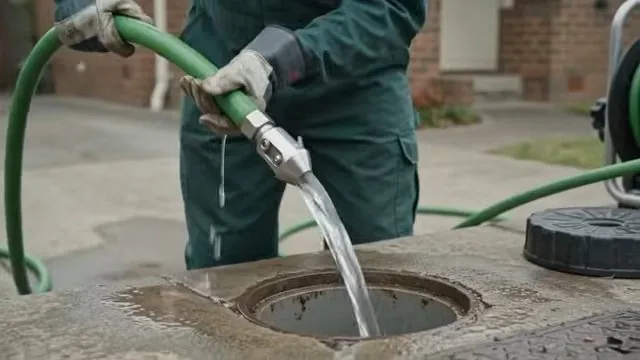
| Situation | Cable | Jetting |
|---|---|---|
| Single blockage, line otherwise clean | Right tool | Overkill |
| Blocked now, people cannot use the bathroom | Right tool, fastest restore | Slower to set up |
| Grease coating the full bore | Cuts a channel only | Right tool |
| Scale on aging pipe wall | Little effect | Right tool |
| Roots through a joint | Cuts them, they regrow | Clears more fully |
| Thin or failing cast iron | Lower risk | Can break through, assess first |
| Prepping a line before relining | Not sufficient | Required |
The honest summary: cabling restores service today, jetting addresses why it keeps happening, and sometimes you want both in that order.
What builds up on a pipe wall
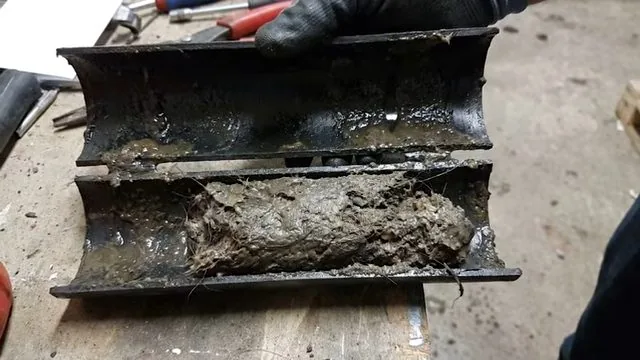
Kitchen waste is the main culprit. Fats go down warm and liquid, then cool and solidify on the pipe wall a few feet along, and every subsequent wash adds to the layer.
Over years the bore narrows from the outside in. Nothing dramatic happens until the remaining channel is small enough that ordinary use blocks it, which is why the first symptom is often a line that has been quietly failing for a long time.
Soap scum and detergent residue do the same on bathroom branches, and on older metal pipe mineral scale adds a rough surface that gives everything else something to grip.
The cast iron caution
This is the section that matters most locally, and the one a national operator will not raise with you.
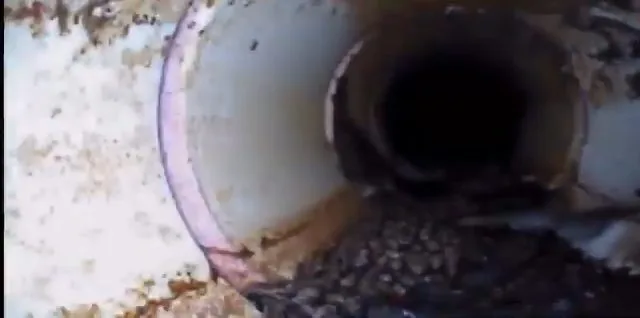
A great deal of local drainage is still the original cast iron, laid in communities whose typical home went up in 1969 and 1977 respectively, which puts that pipe at fifty to sixty years of service. Iron corrodes from the inside, so a line that looks sound can have very little wall left beneath the scale.
High-pressure water does not know the difference. Jetting a line in that condition can open a hole rather than clean it. The answer is not to avoid jetting, it is to survey the line first and set the pressure to what the pipe can take. Anyone who quotes jetting on a 1960s line without looking inside it first is guessing with your drainage.
Cleared three times this year? Each clearing is treating the symptom. Worth a survey.
Call (727) 382-8599What a hydro jetting visit involves, ending with a camera pass
A straightforward residential jetting job follows the same shape.
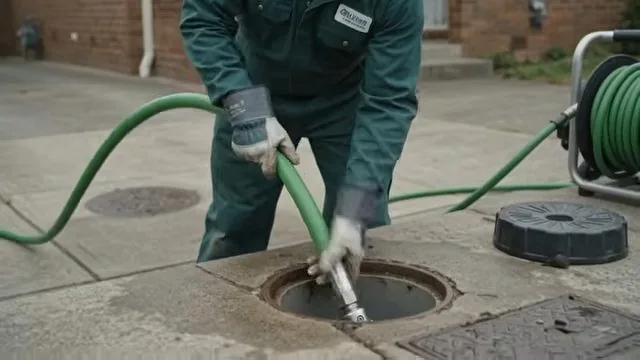
- Survey the line first, both to find the problem and to confirm the pipe can take the pressure.
- Set up at the cleanout, with containment, since this process brings material back out.
- Work the nozzle through in stages rather than driving it to the far end, cutting and flushing as it goes.
- Pull back slowly so the debris is carried out rather than pushed further along.
- Survey again afterwards, which is the only way either of us knows what was actually achieved.
That closing survey is the part worth insisting on. Without it, a jetting invoice is a claim rather than a result.
Intervals, for homes and for kitchens
For a residential line with a history of grease, roughly every eighteen to twenty-four months keeps it ahead of the problem, and a property with mature trees over the lateral is closer to annual.
Commercial kitchens are on a different schedule entirely, driven by volume rather than by the calendar, and the right interval is the one that stops the dish pit backing up at service time rather than the one that looks tidy on a contract.
Hydro Jetting Services questions from Venice homeowners
When is jetting the right answer instead of snaking again?
When the line keeps coming back. A cable cuts a channel through an obstruction and restores flow, which is the right move when someone needs to use the bathroom now. If the pipe wall is coated in grease or scale, that channel closes again, and jetting is what cleans the bore back. Repeat visits to the same line are the signal.
What does grease buildup actually do to a drain line over years?
Fats go down warm and liquid, cool a few feet along, and solidify on the pipe wall. Every wash adds to the layer, so the bore narrows from the outside in. Nothing obvious happens until the remaining channel is small enough that ordinary use blocks it, which is why the first symptom usually appears on a line that has been quietly failing for years.
Is high-pressure jetting safe for older pipe?
Not always, and this is the local catch. Much of the drainage in the older platted communities is original cast iron approaching sixty years of service. Iron thins from the inside, so a line can look fine and have almost no wall left beneath the scale. Driving high-pressure water through one of those can open a hole instead of cleaning it, which is why the line is surveyed first and the pressure matched to what it will stand.
How often should a line be jetted rather than snaked?
For a residential line with a grease history, roughly every eighteen to twenty-four months stays ahead of it, and closer to annually where mature trees sit over the lateral. Commercial kitchens run on volume rather than the calendar. The right interval is the one that stops the line backing up at the worst moment, not the one that looks tidy on a contract.
Jetting alongside cameras, cables and relining
Jetting is one answer inside the wider drain clearing picture, and the survey that should precede it is described there. Where the survey finds a structural fault instead of a coating, it becomes sewer repair and replacement, and a line being prepared for relining has to be jetted first because the liner bonds to whatever is left on the wall.
Iron drainage of that age is concentrated in the Venice Gardens area, and we meet the same stock across the county line in Sarasota.
Same line blocking every few months?
That pattern is a pipe-wall problem rather than a blockage. Tell us the history and we will say whether jetting is the answer or whether the line needs assessing first.