
Venice, FL · Tankless Water Heater Services
Venice Tankless Water Heater Services: Gas Line, Venting and Electrical Limits to Check First
Tankless gets sold on endless hot water, which is true and is rarely the reason it is the right choice. The real arguments are standby loss, footprint and service life, and they do not apply equally to every house.
What follows is where it works in Venice, what the install genuinely requires, and where it leaves people disappointed.
Does it make sense in a Venice house?
A tank keeps forty or fifty gallons hot around the clock whether anyone wants it or not. A tankless unit heats on demand, so that standby loss disappears.
Against that, it costs more to install, it usually needs upgraded gas or electrical supply, and it has a flow ceiling rather than a volume ceiling. It will not run out, but it will only serve so many fixtures at once.
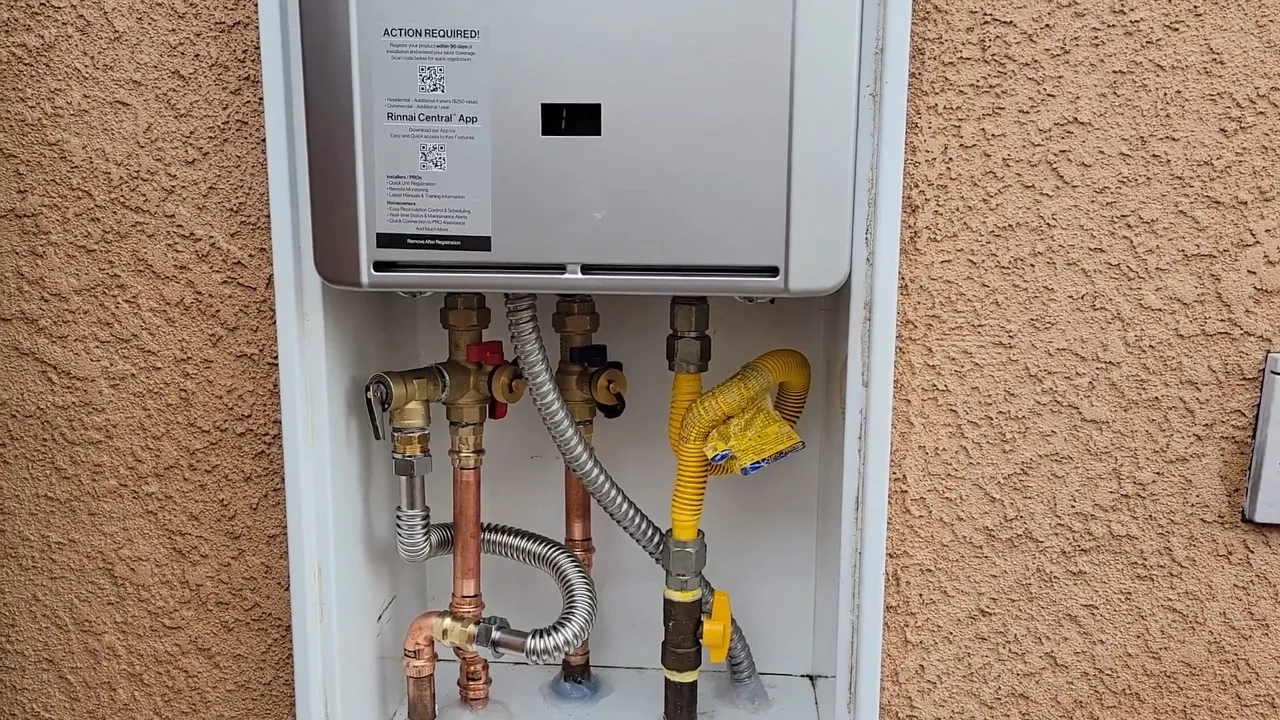
Tankless for seasonal and vacant Venice homes
This is where the case is strongest locally, and it is the one nobody makes.
At the 2020 census Venice had 19,992 housing units with 30.2% recorded vacant, the signature of a city whose median age is 69.8. A tank in a closed-up house spends months heating water for an empty building, every cycle, all season.
A tankless unit in the same house costs nothing while nobody is there and is ready the hour someone arrives. There is a second benefit people notice later: there is no forty-gallon tank sitting in an unoccupied property waiting to fail.
Thinking about it for a seasonal property? That is where it pays best. Worth a call.
Call (727) 382-8599What the install actually needs
Worth knowing before the quote arrives, because this is where the cost sits.
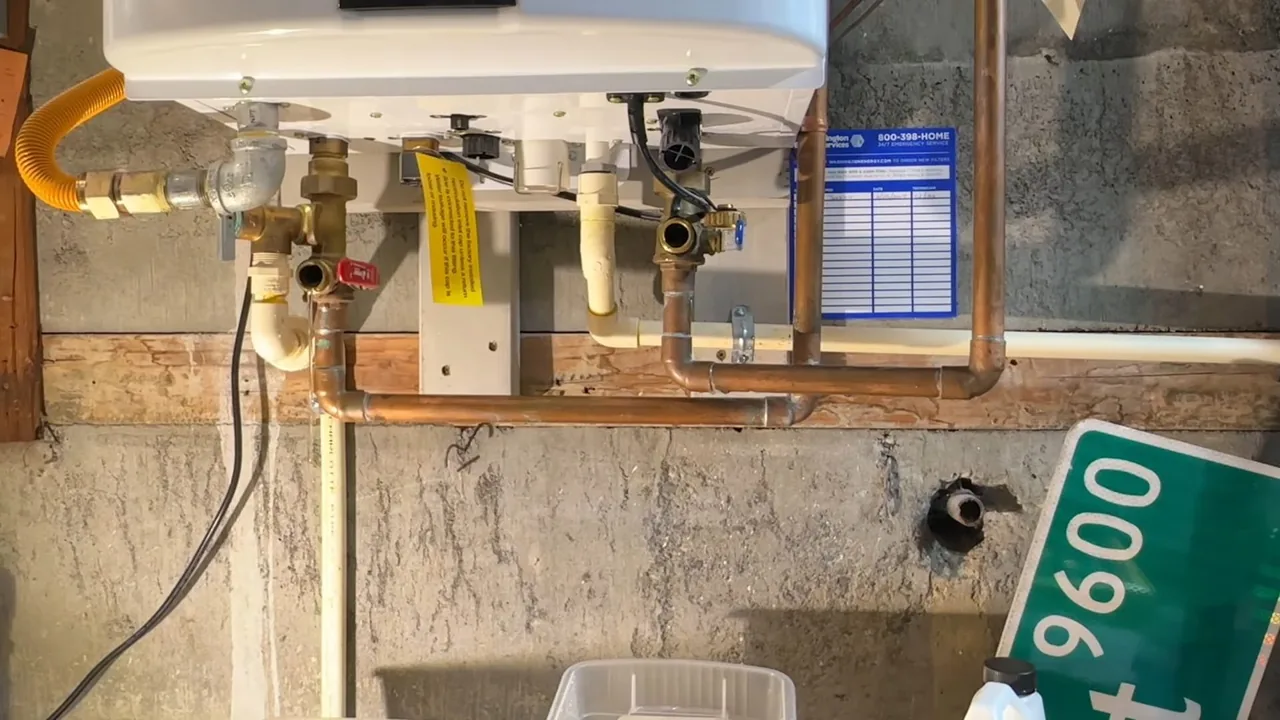
- On gas, a supply line sized for the unit's burn rate. An existing half-inch run feeding an old tank is frequently not enough.
- A dedicated vent path, usually stainless or concentric, since these do not share a conventional flue.
- On electric whole-house units, serious panel capacity. This is the one that stops most electric conversions.
- A condensate drain on a condensing unit.
- Service clearance around the unit, because it needs descaling periodically and something boxed into a cupboard will not get it.
None of this is exotic, but all of it is real work, and a quote that does not mention any of it has not looked.
Tankless descaling: how Venice water sets the interval
Tankless units scale on the heat exchanger, and the water decides how fast. This is where the local answer differs from the generic advice.
Houses on city supply get an easier time of it than the generic advice assumes. No hardness number appears anywhere in the utility's latest annual report, and reverse osmosis treatment leaves little for an exchanger to collect, so the manufacturer's blanket annual interval tends to be more than a city-supplied unit needs.
Wells change the answer completely. Close to a third of South Venice sits on one, and better than four in ten North Port parcels, and untreated groundwater is precisely what shortens a descaling interval. On a well, service it to a schedule rather than waiting for the flow to fall off.
Undersink point-of-use units for fixtures far from the heater
Separate from whole-house tankless, there is the small undersink unit, and it solves a specific irritation rather than a heating problem.
Where a bathroom or a utility sink sits a long way from the heater, you run the tap and wait while a pipe full of cold water clears. A point-of-use unit at that fixture removes the wait, uses far less water, and is a far smaller job than rerouting the hot supply.
It is worth sizing honestly: these suit handwashing and a utility sink. One is not going to run a shower.
Where tankless disappoints people
The common complaint is a brief cold slug partway through a shower, usually when a second fixture opens and the unit modulates. That is a flow-rate issue rather than a fault, and it is a sizing conversation that should have happened before purchase.
The other one is service. A tank that is neglected still mostly works. A tankless unit that is never descaled loses output and eventually fails the exchanger, which is the expensive part. If nobody is going to service it, a tank is the more honest recommendation.
Tankless Water Heater Services questions from Venice homeowners
Does a tankless water heater make sense in a Venice home?
It depends on the house rather than the technology. A tank keeps forty or fifty gallons hot around the clock whether anyone wants it or not, and a tankless unit removes that standby loss entirely. Against that it costs more to install and usually needs upgraded gas or electrical supply. It has a flow ceiling rather than a volume ceiling, so it never runs out but it only serves so many fixtures at once.
How often does a tankless unit need descaling here?
Your water decides it, not the calendar. City of Venice supply is reverse osmosis treated and the city's annual water quality report publishes no hardness figure at all, so the manufacturer's generic annual interval is usually conservative for a city-supplied house. On a private well, and roughly 30% of South Venice parcels are, plan on servicing it more often rather than waiting for the flow to drop.
Can a point-of-use unit fix a slow hot-water run to a far bathroom?
That is exactly what they are for. Where a fixture sits a long way from the heater you run the tap and wait for a pipe full of cold water to clear. A small undersink unit at that point removes the wait and wastes far less water, and it is a much smaller job than rerouting the hot supply. Size it honestly though: these suit handwashing and a utility sink, not a shower.
Will a tankless unit scale up faster on Venice water?
On city supply, less than most people expect, because the water arrives reverse osmosis treated and that is not aggressive on a heat exchanger. If you are on a private well it is a different proposition, and untreated well water is exactly what shortens descaling intervals. The honest answer depends on which supply your address is on.
What credentials should the installer have for a tankless gas conversion?
Ask for the Florida state license number and check it on the Department of Business and Professional Regulation register, and ask for a current insurance certificate. For a gas conversion specifically, also ask how they are sizing the gas line and what vent system they are using, because those two items are where an underpriced quote usually turns out to be missing something.
What a tankless switch pulls in with it
If a tank is what suits the house, installation and replacement covers sizing and permits, and repairing an existing heater is covered on its own page. Descaling intervals depend on whether the address is on treated city supply or a private well, which is also what drives the water softener and filtration question.
The seasonal-occupancy argument is strongest in the communities built for it, the Venetian Falls community and Venice Isle in particular.
Weighing up a tankless unit?
We will tell you what your house would actually need for one, including the gas or electrical work, before you decide. Sometimes the answer is that a tank suits you better.