
Venice, FL · Water Leak Detection Services
Venice Leak Detection for a Doubled Water Bill, a Warm Floor or a Stain With No Source
Almost every leak call starts the same way: something does not add up. The bill is higher than it should be, there is a stain that was not there last month, or a patch of yard stays wet through a dry week.
Detection is the step before repair, and doing it properly is what keeps the repair small. The point is to open one spot, not four.
The bill went up and nothing is dripping
This is the most common version of the call and the one most worth acting on. A supply leak under a slab or behind a wall can run for weeks without showing itself, because the water has somewhere to go that is not your floor.
A jump of a few thousand gallons with no change in how the household uses water is the signal. On a seasonal property it can be much larger before anyone sees a bill at all.
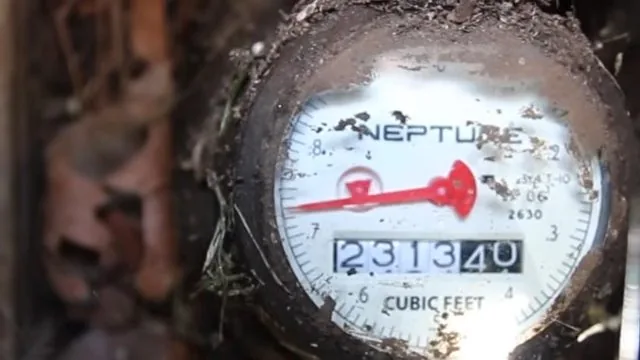
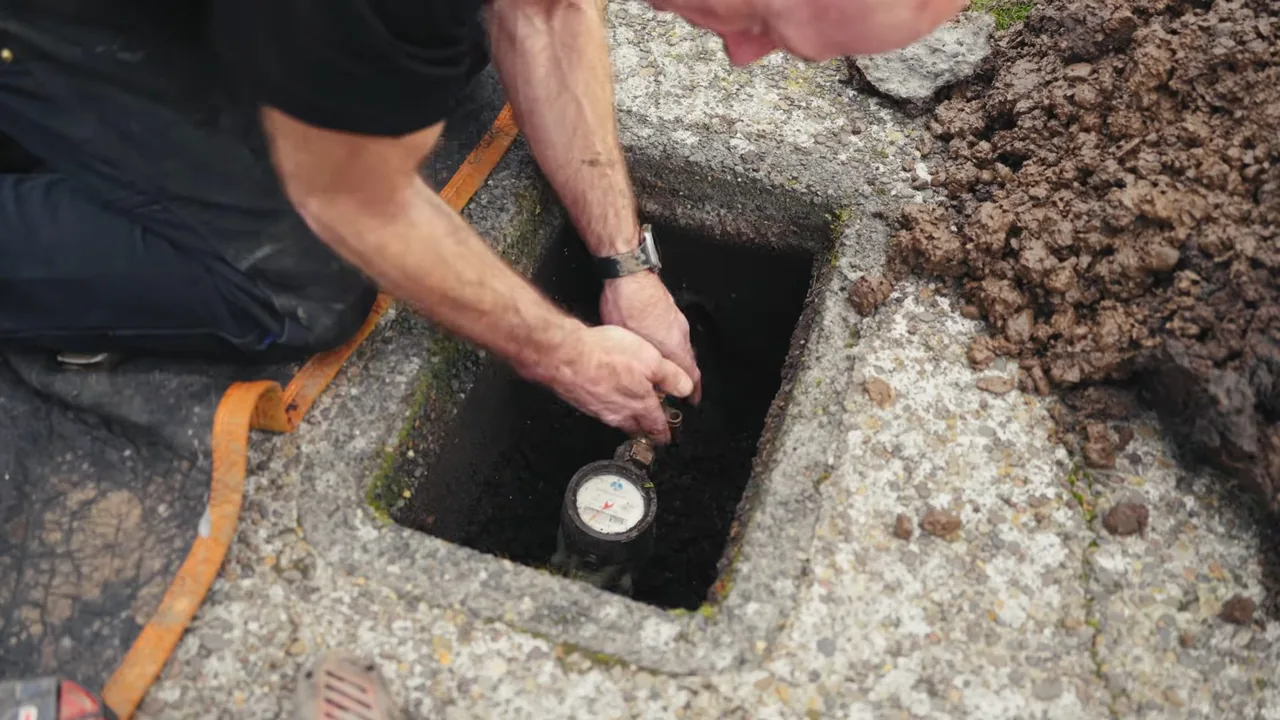
Confirming it at the meter first
Before anyone opens anything, the question is whether water is actually moving. You can do most of this yourself in about twenty minutes.
- Turn off every tap, appliance and ice maker, and leave irrigation alone.
- Find the meter at the street and note the reading, including the small sweep hand or the low-flow triangle if it has one.
- Wait fifteen to twenty minutes without using water anywhere.
- Read it again. Any movement means water is leaving the system somewhere.
- If it moves, close the shutoff at the house. If the meter stops, the leak is on the house side. If it keeps going, it is in the service line between meter and building.
That last step alone narrows the search enormously, and it is worth doing before you call anyone.
Meter still creeping with every tap shut? That is a leak, and it is findable today.
Call (727) 382-8599Spreading stains on ceilings and walls: supply or drain leak?
A spreading stain is the second most common call and it converts quickly to a repair, because by the time it shows on a finished surface the water has been there a while.
What matters is whether it is supply or drain. A supply leak runs constantly and the stain grows steadily. A drain leak only runs when that fixture is used, so the stain darkens after a shower and fades between times. That pattern tells us where to look before anything is cut.
Under the slab and in the crawlspace
Venice housing is overwhelmingly slab-on-grade, which puts a share of the supply pipework underneath the concrete. A leak down there shows up as a warm spot on tile, the sound of water with everything closed, or an unexplained damp patch at the base of a wall.
Locating it is the whole job. The repair that follows might be a single small opening or an overhead reroute that avoids the slab entirely, and that decision depends on where the leak actually is. Slab leak repair itself is covered on its own page.
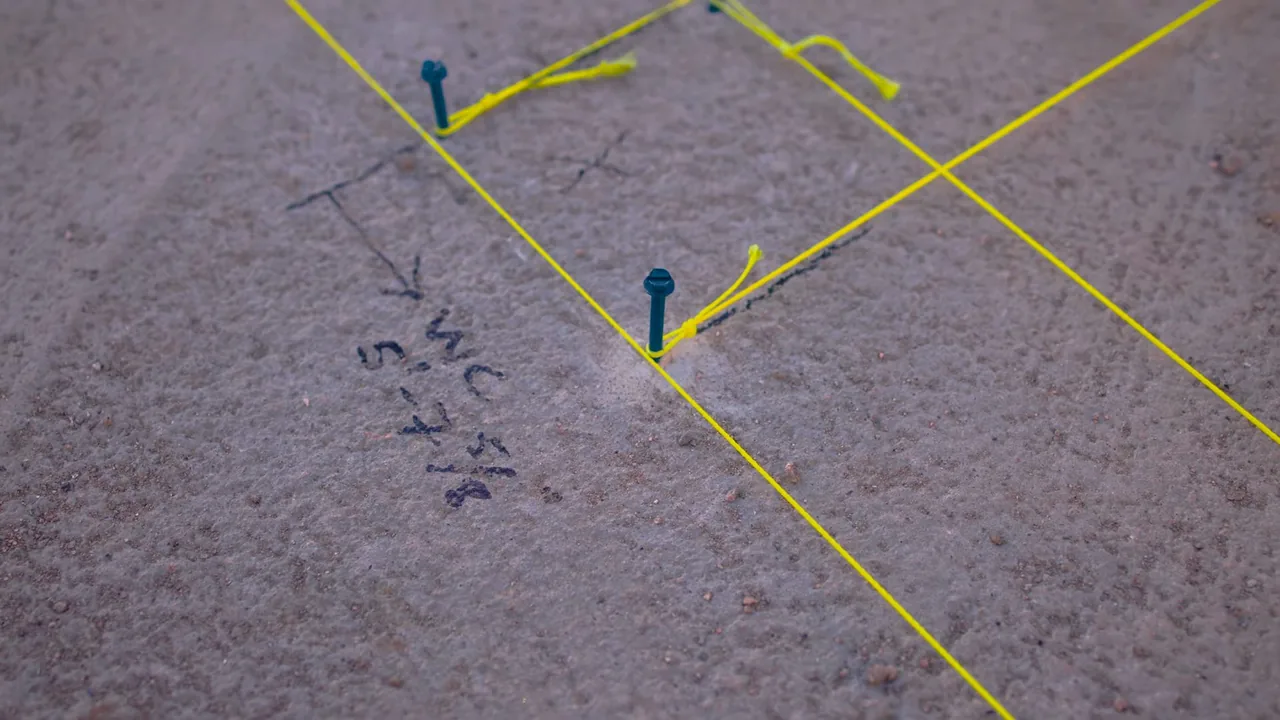
Which leak detection tool answers which question
The equipment matters less than knowing which tool answers which question.
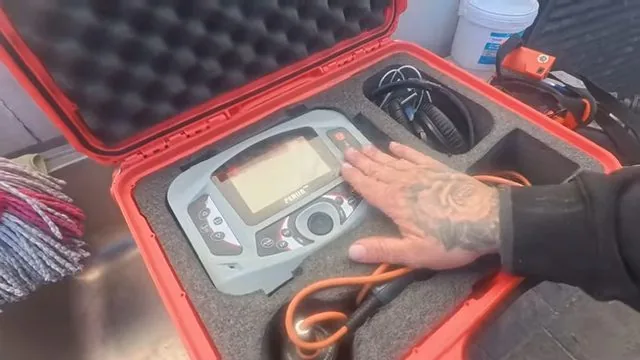
- Acoustic listening, which picks up the sound of pressurised water escaping through a slab or a wall cavity.
- Thermal imaging, which reads the temperature difference a hot or cold line makes through a finished surface.
- Pressure isolation, which closes off sections in turn until the losing one shows itself.
- Tracer gas for lines that are hard to hear, such as a long buried run.
- Camera survey, where the suspect line is a drain rather than a supply.
On most residential calls the meter test plus acoustic work answers it. The rest is for the awkward ones.
Pinhole leaks in copper
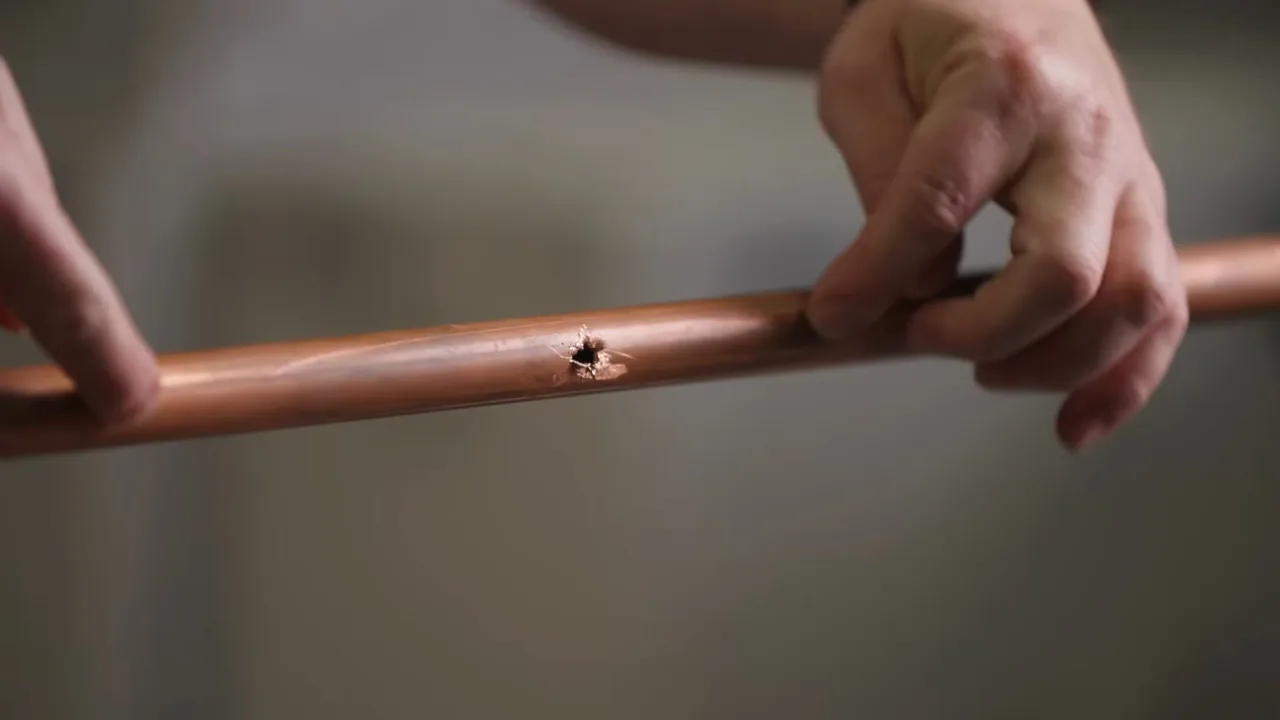
Copper does not usually fail all at once. It develops pinholes, often several over a short period, and the first one is rarely the last.
The reason matters for what you do next. A single pinhole from a knock or a support rubbing is a repair. Multiple pinholes across a system point at the pipe itself reaching the end of its life, and at that point repeated patching costs more over a couple of years than replacing the run.
Irrigation and sprinkler lines
Irrigation is behind a surprising share of high-bill calls, and it is easy to miss because the system runs on a timer when nobody is watching.
A cracked lateral, a valve that does not fully close or a broken head on a zone you rarely look at will all push a bill up without producing anything you would recognise as a leak. Isolating irrigation from the house supply during the meter test separates the two in one step.
Pools and spas
Pools lose water to evaporation as well as to leaks, and in this climate evaporation is not trivial, so the first job is telling the two apart.
The bucket test does it: a bucket of pool water set on a step, marked inside and out, loses water at the same rate as the pool if evaporation is the only cause. If the pool drops faster than the bucket, something is leaking, and then it is a question of shell, fittings or the plumbing run.
If you can smell gas
This one is not a detection call, it is a safety call, and the order matters.
Leave the building. Do not use switches, the phone or anything that sparks while you are inside. From outside, call the gas utility and emergency services first. Only once the supply is made safe is there a plumbing job here, and at that point we locate and repair the line. Nothing about that sequence is us passing the work along, it is simply the correct order.
Yard and service-line leaks
A patch of yard that stays green or soft through a dry spell, or a soggy strip running from the meter toward the house, usually means the service line.
Worth being straight about this one: buried-line work is the least predictable category on this page. The line can be located, but the repair depends on depth, what it runs under and what it is made of, and it is the job most likely to need a second visit once it is open.
Plumbing leak or roof leak?
Water coming through a ceiling is not always plumbing, and sending the wrong trade costs you a visit.
Plumbing leaks run regardless of weather, often follow fixture use, and usually sit below a bathroom, kitchen or a run of pipe. Roof leaks appear during or just after rain, tend to track down from an exterior wall or a penetration, and stop in dry weather.
We can tell you which one you are looking at. Roofing and gutter work itself is a roofing trade and not something we take on, so if it turns out to be the roof we will say so rather than find a plumbing reason to be there.
Commercial and multi-unit leak work
Commercial detection is a different problem because the water use baseline is harder to read and the building usually cannot be shut down for a meter test during trading hours.
In multi-unit buildings the recurring question is which unit the loss belongs to, and that is answered by isolating risers and branches in turn rather than by guessing from where the damage appeared.
Why there is no basement to check here
Guides written for other parts of the country spend a lot of time on basement leak detection. That does not apply in Venice, where the water table sits close to the surface and homes are built on slab instead.
The local equivalent is everything in the two sections above: under-slab supply runs and, on the minority of properties that have them, crawlspaces. Saying so is more useful than reprinting basement advice for a market that does not have any.
Water Leak Detection Services questions from Venice homeowners
My water bill doubled but I cannot see a leak anywhere. What now?
Start at the meter. Shut every tap and appliance, leave irrigation off, note the reading and check it again twenty minutes later. Any movement means water is leaving the system. Then close the shutoff at the house: if the meter stops the leak is inside, and if it keeps moving it is in the service line between the meter and the building. That one test narrows the search enormously.
There is a brown stain spreading on my ceiling. Is that a plumbing leak?
Usually, and the pattern tells us which kind. A supply leak runs constantly, so the stain grows steadily. A drain leak only runs when that fixture is used, so it darkens after a shower and fades in between. If it only appears during or after rain and stays dry otherwise, that points at the roof rather than the plumbing.
I can smell gas. What should I do before anyone comes out?
Leave the building, and do not touch switches or use the phone while you are inside. From outside, call the gas utility and emergency services first. Once the supply has been made safe there is a plumbing job to do, and we locate and repair the line at that point. Please do not wait for a plumber before making that first call.
How is a leak found without tearing out walls?
Mostly by listening. Acoustic equipment picks up the sound of pressurised water escaping through a slab or a wall cavity, and thermal imaging reads the temperature difference a hot or cold line leaves on a finished surface. Pressure isolation closes off sections in turn until the losing one shows itself. On most homes the meter test plus acoustic work answers it.
Is my pool losing water to a leak or to evaporation?
The bucket test separates them. Set a bucket of pool water on a step, mark the level inside the bucket and outside on the pool wall, and leave it a couple of days without swimming. If both drop by the same amount it is evaporation, which is not trivial in this climate. If the pool drops faster, something is leaking.
Could my irrigation system be behind a high water bill?
Frequently, because it runs on a timer when nobody is watching. A cracked lateral, a valve that does not fully close or a broken head on a zone you rarely look at will all push a bill up without producing anything you would recognise as a leak. Isolating irrigation from the house supply during the meter test separates the two in one step.
Once the leak is found, what comes next
Detection is the first half. A leak under the concrete is repaired on the slab leak detection and repair page. A line that has already let go goes to repairing a failed supply line. Repeated pinholes across a system are usually a whole-house repiping conversation rather than another patch, and anything already soaked is on the water damage restoration page.
Slab-era housing makes this one of our steadiest calls in the Venice Gardens area and the Venice Isle community, and the well-supplied properties in the South Venice area add irrigation and service-line work on top.
Paying for water you never used?
Bring us the bill and what you have noticed. Most hidden leaks here are confirmed at the meter in a few minutes, and locating one properly is what keeps the repair small.